Grease trap pumping keeps a restaurant kitchen from backing up, and most commercial traps need service every 1 to 3 months depending on volume. Mobile Porta Pros pumps and hauls waste once fats, oils, grease and solids build up, before the interceptor stops doing its job, similar in spirit to septic pumping service work on residential tanks.
The rule of thumb in the industry is simple: a trap gets pumped once fats, oils, grease and solids reach 25 percent of the liquid depth. Past that point the interceptor loses capacity fast and grease starts moving downstream into the line. Kitchens in Mobile running fryers and grills hit that mark quicker than a slow-service bar, much like a busy site covered under construction site services burns through portable capacity faster than a quiet one. If you are not sure where your trap stands, septic tank warning signs covers what slow drains and odors usually mean, and the same logic applies to a grease interceptor. Waiting too long is the most common reason a kitchen ends up needing emergency septic service instead of a scheduled visit.
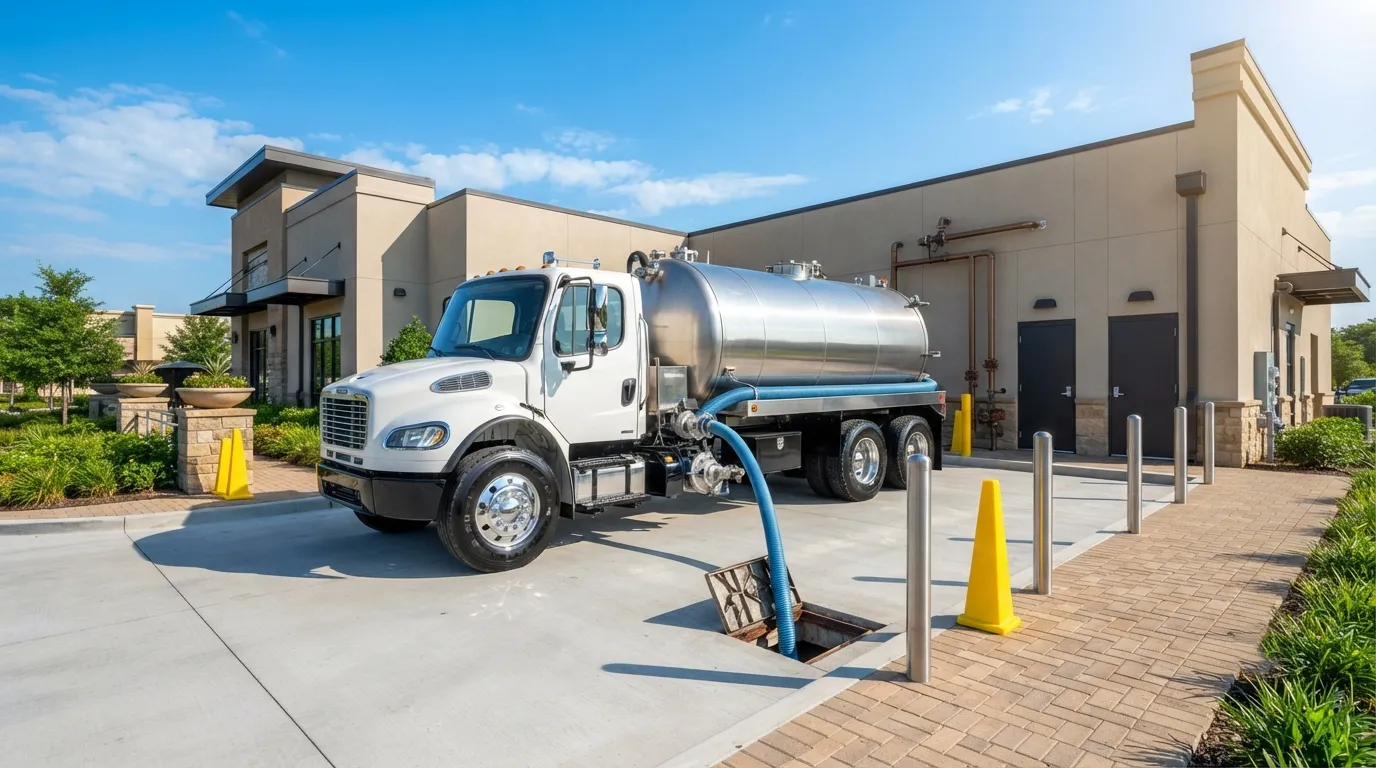
Cost depends on tank size, grease load and how far our truck has to travel. A restaurant near downtown Mobile pays differently than one out past Tillmans Corner, 10.4 miles southwest, simply because of drive time and access, the same distance factor covered in porta potty rental cost for portable units. For a broader comparison across septic and grease work, septic tank pumping cost breaks down what drives price on the residential side, and the same variables (tank size, access, frequency) carry over to commercial grease pumping.
| service | duration | typical range |
|---|---|---|
| septic pumping | day visit | $150 to $300 |
| septic pumping | weekend call | $50 to $150 |
Grease trap jobs get quoted per tank and per visit rather than by the day, since every kitchen's setup is different. Ask for a request a quote with your trap size and last pump date on hand, or check contact if you have questions before booking.
A clogged grease interceptor backs up into the kitchen, and that shuts down service faster than almost anything else in a restaurant. Regular grease trap pumping protects the plumbing, keeps the kitchen inspection-ready, and avoids the kind of overflow that triggers a call to emergency septic service on a Friday night, the same reasoning behind stocking emergency porta potty rental for a site that cannot afford downtime. Commercial kitchens share plumbing logic with septic systems generally: a residential tank gets pumped every 3 to 5 years based on tank size and household size, and a grease trap follows the same principle scaled down to weeks or months instead of years. If your property runs both a septic system and a grease trap, septic pumping service and septic tank cleaning round out the maintenance schedule so nothing gets missed, and how often to pump a septic tank explains the residential side of that timeline. Kitchens near Prichard, 11.3 miles north, and Chickasaw, 11.5 miles north, are on the same pumping schedule we run through central Mobile, and our service areas page covers the rest of the coverage map.
Restaurants aren't the only sites that need this. Event caterers, food trucks parked for festivals, and temporary kitchens at venues covered under festival restroom rental or county fair restrooms generate grease too, and a holding tank or trap still needs a pump-out before it overflows. If you are setting up sanitation for a larger event, event restroom rental and holding tank rental are worth pairing with your grease service call, and a handwashing station rental covers the crew's washing needs on site.
Most commercial kitchens schedule pumping every 1 to 3 months, but high-volume fryers push that closer to monthly. Track your trap depth between visits. If grease is nearing the 25 percent mark before your next scheduled date, call for an earlier pump instead of waiting it out.
Yes. Overflows do not wait for a scheduled date, so we run emergency calls when a trap backs up mid-shift. The same crew that handles emergency septic service responds to grease emergencies across Mobile.
It can, though most kitchens prefer early morning or late night to avoid disrupting service. We work around your schedule and can pump before opening or after close, whichever keeps the kitchen running, the same flexibility we offer on construction dumpster rental pickups for active sites.
Yes, if they run a grease interceptor or holding tank. Food trucks at events booked through festival restroom rental or similar venues still generate grease waste that needs a proper pump-out, not a dump down a drain, and a portable sink rental or portable restroom rental usually rides along on the same booking.
It gets hauled off for proper disposal, separate from general waste. This keeps grease out of the sewer system and off your property, and it is the same disposal principle behind dumpster permit requirements for solid waste, just applied to liquid grease instead.
Yes. Mobile Porta Pros delivers grease trap pumping across Mobile and the surrounding metro, with same-day and next-day drop-off available on most orders.
Pricing depends on the unit and how long you need it. See our cost breakdown and request a free quote for an exact figure.
Standard rentals include scheduled service — a pump-out, a clean, a restock and fresh deodorizer. Busy or hot-weather sites can be serviced more often.
Call now or request a free quote — clean units, on-time delivery, transparent pricing.